
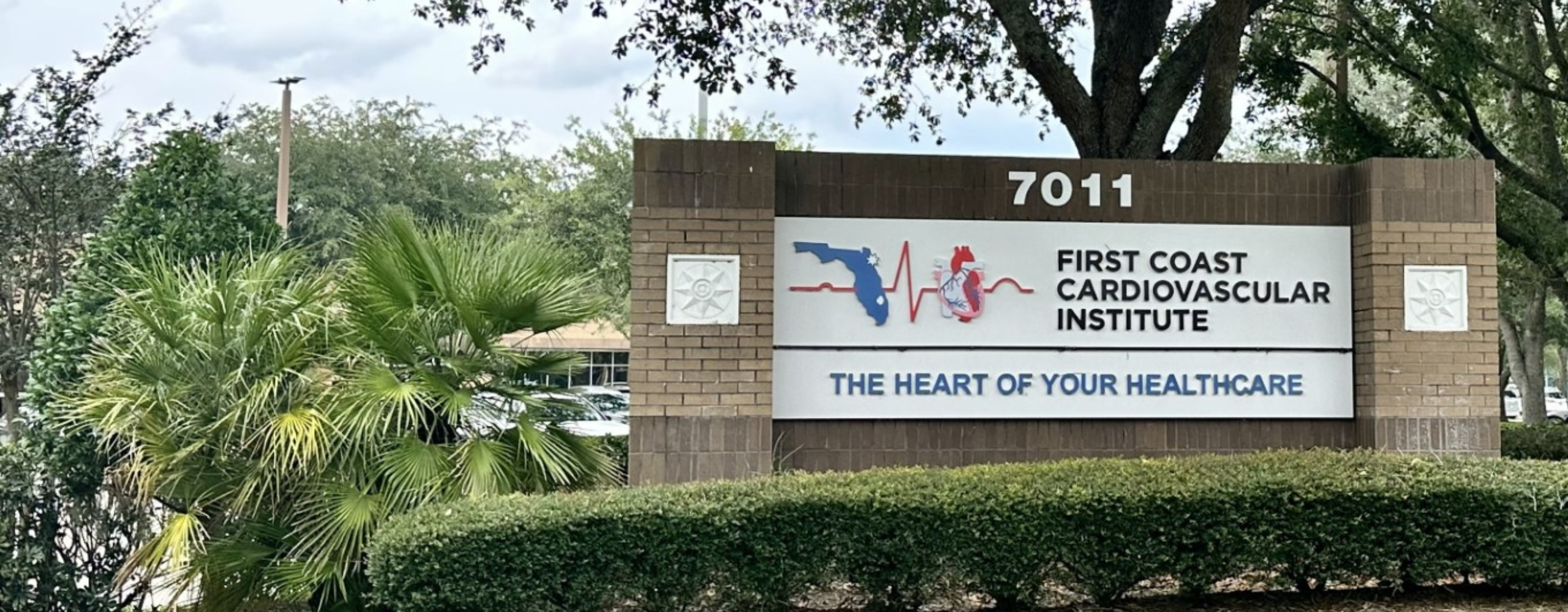
First Coast Cardiovascular Institute Strengthens Its Future Through a Physician-Led Partnership
As First Coast Cardiovascular Institute (FCCI) in Jacksonville, Florida grew, it needed greater operational support to expand outpatient care, but wanted to preserve its physician-led model and patient-first philosophy. Partnering with Cardiovascular Logistics (CVL) provided the scale, infrastructure, and collaboration FCCI needed to invest in advanced imaging, new outpatient facilities, and expanded care programs without disrupting how physicians practice medicine. The result is a stronger operational foundation that allows FCCI to deliver more convenient, cost-effective cardiovascular care and position the practice for long-term, sustainable growth.
The Challenge: Sustaining Growth While Preserving What Matters
For more than 20 years, First Coast Cardiovascular Institute (FCCI) has served patients across Northeast Florida as a trusted, patient-centered cardiovascular practice. With more than 45 providers and approximately 170 employees across nine clinic locations, FCCI cares for hundreds of patients each day in both outpatient clinics and hospital settings.
As FCCI grew, so did the complexity of sustaining its performance.
Administrative demands increased. Expectations around outpatient services grew. Competition from hospital-owned practices increased. FCCI saw clear opportunities to expand imaging, strengthen care coordination, and develop additional outpatient facilities, but doing so independently would require more scale and support.
Through it all, FCCI stayed grounded in its mission: to enhance quality of life through cutting-edge, compassionate cardiovascular care, and to advance medicine through research, education, and patient empowerment. That meant treating every patient like family, protecting clinical autonomy, and expanding access to care without losing what made the practice successful in the first place.
As healthcare shifted more toward outpatient care, FCCI wanted to expand in ways that remained true to its mission and identity. The practice sought a partnership that could strengthen its operational foundation, support sustainable growth, and allow its providers to continue delivering high-quality care.
The Solution: A Partnership That Supports Outpatient Care and Autonomy
As FCCI considered its options, its leadership team focused on finding the right kind of partner. The practice needed stronger infrastructure and operational support, but it wasn’t willing to give up control over how care was delivered.
Partnership with a national cardiovascular platform offered a different path. One that allowed FCCI to maintain local governance while gaining access to resources, systems, and a broader community of cardiovascular leaders.
That approach aligned with how FCCI viewed outpatient care. More services could be delivered outside the hospital. Patients could be seen closer to home. In many cases, they could be discharged on the same day.
As Ibrahim Aloustwani, CEO of FCCI, put it, “Appropriate outpatient migration is the right thing to do for patients because it’s more convenient, more cost-effective, and allows many of them to recover at home.”
After a careful evaluation process, FCCI chose to partner with Cardiovascular Logistics (CVL). CVL’s physician-led structure and focus on outpatient cardiovascular care aligned with where the practice wanted to go next.
The Choice: Why CVL Made Sense for FCCI
FCCI partnered with Cardiovascular Logistics because the platform offered what the practice was looking for: support without interference.
Several factors ultimately mattered most to FCCI’s leadership:
- A physician-led governance model that preserved local control over clinical decisions
- Operational and financial support that could scale with the practice as it grew
- Access to peer cardiovascular practices willing to share experience, not just ideas
- Greater leverage with payers and vendors through increased scale
- A shared belief in expanding outpatient care where it benefits patients most
Just as important was the collaborative environment. For the first time, FCCI could regularly connect with peer practices such as Clearwater Cardiovascular Consultants and Cardiovascular Institute of the South, learning from groups that had already navigated similar challenges.
Joining the platform also gave FCCI scale it hadn’t previously had. Aloustwani described it as gaining “critical mass.” The practice could move faster, negotiate more effectively, and approach growth with greater confidence.
“If we’re launching a new service or trying to improve a process,” he explained, “we can talk with peers who have already done it. We’re learning from each other.”
The Process: Building Stronger Infrastructure Without Disrupting Care
After launching the CVL partnership, FCCI began upgrading its administrative foundation. The focus was on consistency, visibility, and scalability — not on changing how physicians practiced.
Clinical operations remained fully physician-led throughout the transition. Care continued without disruption, delivered the way FCCI providers believed was best for their patients.
Behind the scenes, several changes took place:
- Phased modernization of accounting systems to support scalability
- Consolidation of HR and payroll functions to improve consistency and efficiency
- Standardization of supply chain and inventory processes across all locations
- Introduction of enterprise-level reporting tools to provide clearer insight into performance
The process wasn’t flawless. And that was expected.
“The first couple of weeks of any implementation bring some hiccups,” Aloustwani said. “But once you get past that point, everything becomes easier and more efficient.”
What mattered most was that FCCI preserved its culture while building a stronger operational backbone.
The Results: Momentum Across Care, Operations, and Growth
With added support and scale, FCCI was able to move forward on initiatives that had been part of its long-term plan.
Since joining CVL, the practice has made progress on several fronts:
- Two PET/CT systems were launched within two years, expanding diagnostic capabilities
- A new clinic opened in Orange Park, Florida, with nearly 12,000 square feet and 20 exam rooms
- Construction was completed on the First Coast Cardiovascular Surgical Center, the practice’s ambulatory surgery center
- New and expanded care programs were introduced, including remote patient monitoring, mobile cardiac telemetry, transition-of-care services, and virtual cardiac rehabilitation
- Improved analytics and reporting provided clearer visibility into performance and planning
The ambulatory surgery center, expected to open in early 2026, will allow more procedures to be performed appropriately in an outpatient setting—offering a lower-cost alternative to hospital-based care and a more comfortable experience for patients.
Operationally, leadership gained better insight into how the practice was performing across locations. Decisions became easier to make.
“We now have the analytical support to make faster and more informed decisions,” Aloustwani said.
Just as important has been the collaboration. FCCI physicians and administrators now regularly connect with peers across the CVL network, sharing ideas and accelerating progress.
Looking Ahead
With its ambulatory surgery center opening soon and outpatient services continuing to expand, FCCI is entering its next phase with confidence. The focus remains on patient experience, physician autonomy, and sustainable growth.
“Joining CVL positioned us to grow the right way,” Aloustwani said. “We’re confident we made the right decision for our physicians, staff, and patients.”
FCCI’s experience shows that independent cardiovascular practices do not have to choose between autonomy and scale. With the right partnership, physicians can continue delivering the highest quality care while building for the future.
Interested in Joining a Leading Cardiovascular Platform?
If your practice is exploring ways to grow while preserving its identity and approach to care, consider partnering with Cardiovascular Logistics. Contact us today to discover how joining a physician-owned, physician-led platform can provide the resources, autonomy, and collaborative opportunities your practice needs to thrive.
FAQs
Why did First Coast Cardiovascular Institute (FCCI) partner with Cardiovascular Logistics (CVL)?
FCCI partnered with CVL to strengthen its operational foundation, support sustainable growth, and expand outpatient cardiovascular services while preserving physician-led clinical autonomy. The partnership allows FCCI to access greater scale, infrastructure, and collaboration without compromising its mission or care philosophy.
How has partnering with CVL improved FCCI’s outpatient cardiovascular care?
Through its partnership with CVL, FCCI expanded outpatient capabilities, including advanced imaging, a new clinic location, and an ambulatory surgery center. These investments support more efficient, appropriate outpatient care, improving convenience and affordability while enabling procedures that often allow patients to return home the same day.
Did FCCI maintain clinical independence after joining CVL?
Yes, FCCI physicians retained full control over clinical decision-making after joining CVL. The partnership focuses on strengthening administrative, financial, and operational systems while allowing providers to continue practicing medicine in the way they believe best serves their patients.
What operational improvements did FCCI achieve through the CVL partnership?
The partnership enabled FCCI to modernize administrative systems, standardize processes across locations, improve reporting and analytics, and strengthen supply chain and contracting capabilities. These improvements reduced administrative burden and provided leadership with clearer insights to support data-driven decision-making.
What can other independent cardiology practices learn from FCCI’s experience with CVL?
FCCI’s experience demonstrates that independent cardiology practices can preserve autonomy, enhance patient experience, and achieve sustainable growth by partnering with a physician-led cardiovascular platform. By aligning operational scale with clinical independence, practices can expand outpatient care, improve efficiency, and remain competitive in a rapidly evolving healthcare landscape.


Capital Cardiology Associates Builds for the Future by Joining a Physician-Led Cardiovascular Platform
Capital Cardiology Associates (CCA), one of the largest independent cardiology practices in New York State, joined Cardiovascular Logistics (CVL) in...
Cardiovascular Institute of the South Expands Its Impact Through a Physician-Led Cardiovascular Platform
Cardiovascular Institute of the South (CIS), a leading cardiovascular practice serving Louisiana and Mississippi, helped found Cardiovascular Logistics (CVL) to preserve...